


Introduction
- Bacteriostatic water is a term used in pharmaceutical and laboratory-related discussions, particularly when describing certain sterile water preparations containing a preservative. Understanding what the term means, how these preparations are composed, and how they differ from other types of water can help readers interpret product labels and technical documentation more accurately.
- Although bacteriostatic water and sterile water are sometimes discussed together, the terms are not interchangeable. Their composition, intended applications, and product specifications can differ.
- In this guide, we explore the meaning of bacteriostatic water, its typical composition, the science behind the term bacteriostatic, and important distinctions to understand when reviewing technical information.
What Is Bacteriostatic Water?
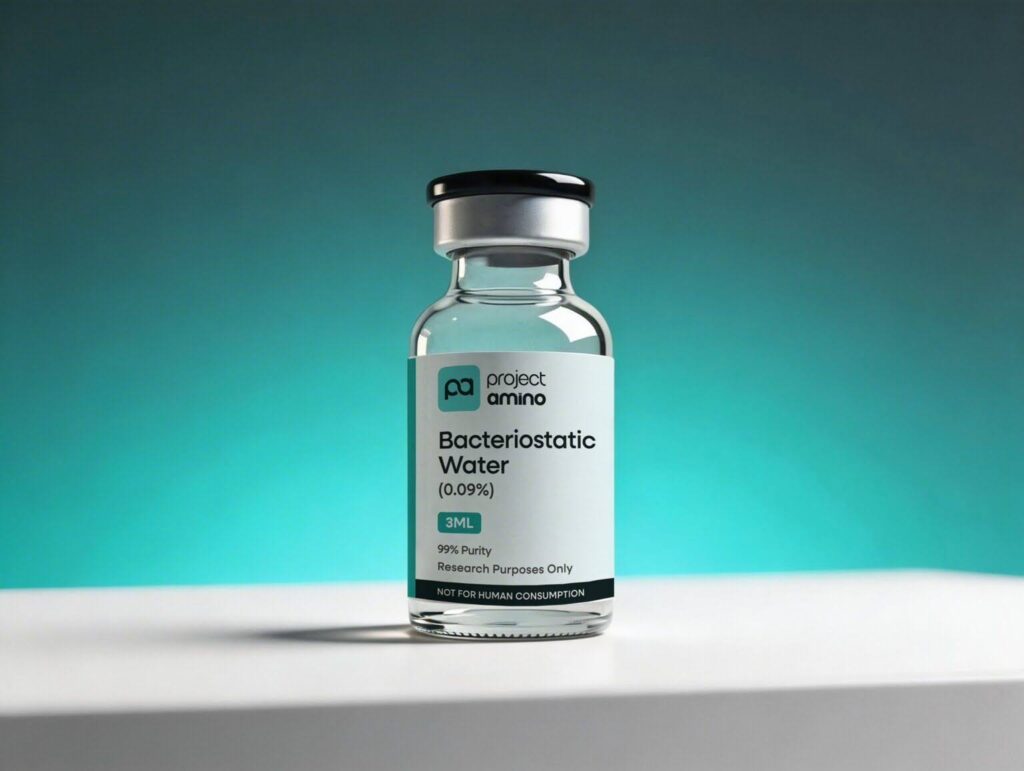
- Bacteriostatic water is a water-based preparation that contains a bacteriostatic preservative intended to inhibit bacterial growth under specified conditions.
- In pharmaceutical terminology, Bacteriostatic Water for Injection, USP refers to a specific sterile preparation of water for injection that contains benzyl alcohol as a preservative. U.S. product labeling describes formulations containing either 0.9% or 1.1% benzyl alcohol, depending on the product.
- These preparations are supplied in multiple-dose containers intended for specified pharmaceutical purposes, such as diluting or dissolving certain medications according to the applicable product instructions.
- It is important to distinguish this defined pharmaceutical product from products described more generally as bacteriostatic water. Formulations and intended uses should always be verified against the relevant manufacturer’s documentation and product label.
What Does “Bacteriostatic” Mean?
- The word bacteriostatic describes an effect that inhibits the growth or multiplication of bacteria. It does not necessarily mean that the bacteria are killed.
- This distinction is important when interpreting scientific and pharmaceutical terminology.
- Bacteriostatic: Inhibits bacterial growth under specified conditions.
- Bactericidal: Kills bacteria under specified conditions.
- Sterile: Indicates that a product meets the applicable requirements for freedom from viable microorganisms.
- These terms describe different properties. A bacteriostatic preservative does not, by itself, establish that a product is suitable for every application or that it will remain free from contamination after handling.
- The term also should not be interpreted as a guarantee that bacterial growth is impossible in all circumstances. Preservative performance depends on factors such as the formulation, concentration, and conditions of use.
What Are the Bacteriostatic Properties of Bacteriostatic Water?
- The bacteriostatic properties of a preparation depend on its formulation and the conditions under which it is used. In Bacteriostatic Water for Injection, USP, benzyl alcohol serves as a preservative intended to inhibit bacterial growth.
- The presence of a preservative should not be interpreted as a guarantee that bacterial growth is impossible or that the product is protected indefinitely against contamination.
- When evaluating a specific product, readers should distinguish between its stated preservative properties, its sterility specifications, and its handling requirements.
What Is Bacteriostatic Water Made Of?
Understanding bacteriostatic water composition is important when comparing product specifications and interpreting pharmaceutical terminology.
For the U.S. pharmaceutical preparation known as Bacteriostatic Water for Injection, USP, the labeled formulation includes Water for Injection and benzyl alcohol. Other products should be assessed individually rather than assumed to have the same ingredients or concentrations.
1. Water for Injection
- Water for Injection is the primary aqueous component of the specified pharmaceutical preparation. It is produced and controlled according to applicable pharmaceutical quality requirements.
- Water for Injection should not automatically be equated with distilled water, purified water, or ordinary laboratory water
- . Although these terms all refer to water, they can involve different quality specifications and intended applications.
2. Benzyl Alcohol
- Benzyl alcohol acts as a bacteriostatic preservative in the specified pharmaceutical formulation.
- U.S. labeling for Bacteriostatic Water for Injection, USP includes formulations containing 0.9% or 1.1% benzyl alcohol. These concentrations should not be generalized to all products described as bacteriostatic water.
- Benzyl alcohol also has important safety considerations. For example, U.S. product labeling warns against using benzyl-alcohol-containing preparations in neonates because of the risk of serious toxicity.
Why Does the Formulation Matter?
- Bacteriostatic water composition can affect a product’s characteristics, specifications, and intended applications. Products with similar names may differ in their ingredients, preservative concentrations, packaging, or labeled uses.
- For this reason, a product name alone is not sufficient to establish its suitability for a particular purpose. The relevant product label, technical documentation, and manufacturer’s instructions should be consulted.
Bacteriostatic Water vs. Sterile Water
- Bacteriostatic water and sterile water are related terms, but they describe different characteristics.Bacteriostatic Water for Injection, USP contains a bacteriostatic preservative in its specified formulation. Sterile Water for Injection, USP does not contain that bacteriostatic preservative.
- The following comparison refers specifically to these named pharmaceutical preparations.
| Feature | Bacteriostatic Water for Injection, USP | Sterile Water for Injection, USP |
| Basic composition | Water for Injection with a preservative | Water for Injection without a bacteriostatic preservative |
| Benzyl alcohol | Present in the specified formulation | Not present as a preservative |
| Main distinction | Includes a preservative intended to inhibit bacterial growth | Does not contain that preservative |
| Intended application | Determined by the product labeling | Determined by the product labeling |
- This comparison should not be generalized to every product marketed under broader terms such as sterile water or bacteriostatic water.
- Neither term establishes that a product is suitable for every laboratory, pharmaceutical, or research application. Product specifications and intended uses must be reviewed individually.
What Is the Role of Bacteriostatic Water in Pharmaceutical and Laboratory Contexts?
- Bacteriostatic water is most clearly defined in pharmaceutical labeling, where specific preparations have documented compositions and intended applications.
- In the pharmaceutical context, the preservative in a specified formulation is intended to inhibit bacterial growth under defined conditions. This characteristic is relevant to certain preparations supplied in multiple-dose containers.
- In laboratory and research-related discussions, understanding this terminology can help readers distinguish between a product’s composition, quality specifications, and intended use.
- However, bacteriostatic water should not be assumed to be suitable for every research material, experimental procedure, or laboratory application. Compatibility depends on the material, the procedure, and the specifications of the particular product.
- Researchers and laboratory personnel should consult validated procedures, applicable safety documentation, and manufacturer guidance when evaluating materials for a particular application.
Important Considerations When Reviewing Bacteriostatic Water
- When reviewing a bacteriostatic water product or its documentation, several factors deserve attention.
Product Specifications
- Check the full product name, stated ingredients, preservative concentration where applicable, quality specifications, manufacturer information, and intended application.
- Similar product names do not necessarily indicate identical formulations. Specifications should be confirmed using the relevant documentation.
Sterility and Contamination
- The presence of a preservative does not make a product immune to contamination. Sterility claims, packaging, storage, and handling requirements should be assessed according to the manufacturer’s documentation.
Compatibility
- A preparation suitable for one specified application may not be appropriate for another. Compatibility should not be inferred from the word bacteriostatic alone.
Safety Information
- Preservatives can introduce specific safety considerations. Benzyl alcohol, for example, is associated with a warning concerning use in neonates in U.S. product labeling.
- Applicable warnings, restrictions, and instructions should be reviewed before interpreting the suitability of a specific preparation.
What Should You Check on a Bacteriostatic Water Label or COA?
- A product label and a certificate of analysis (COA), when provided, serve different documentation purposes.
- When reviewing a bacteriostatic water label, check the product’s full name, listed ingredients, stated preservative concentration where applicable, manufacturer details, and intended use.
- If a COA is available, review which product or batch it covers and which tests and results it reports. A certificate of analysis should not be assumed to establish every possible quality attribute unless the relevant testing and results are documented.
- For research-focused materials, documentation should be interpreted according to its actual contents. Do not assume that a particular COA, test, or certification exists unless it is available from the manufacturer or supplier.
Regulatory Context
- Product definitions, labeling requirements, and permitted uses can vary by jurisdiction. Readers should consult the applicable local requirements and the current documentation for the specific product being evaluated.
Frequently Asked Questions (FAQs)
(1) Is bacteriostatic water the same as sterile water?
Answer – No. Bacteriostatic Water for Injection, USP contains a bacteriostatic preservative in the specified formulation, while Sterile Water for Injection, USP does not contain that preservative. Their intended applications are determined by their respective product labels.
(2) What is bacteriostatic water made of?
Answer – The specified U.S. pharmaceutical formulation contains Water for Injection and benzyl alcohol as a preservative. The precise ingredients and concentrations of other products should be verified using their own product documentation.
(3) What are the bacteriostatic properties of bacteriostatic water?
Answer – Bacteriostatic properties refer to the inhibition of bacterial growth under specified conditions. In the specified pharmaceutical formulation, benzyl alcohol serves as the preservative intended to inhibit bacterial growth.
(4) How do you pronounce bacteriostatic water?
Answer – The term bacteriostatic water can be pronounced by breaking it into two parts. Bacteriostatic is commonly pronounced bak-TEER-ee-oh-STAT-ik, followed by the word water. Pronunciation can vary slightly by accent.
(5) Does all bacteriostatic water contain the same concentration of benzyl alcohol?
Answer – No. U.S. labeling for Bacteriostatic Water for Injection, USP includes formulations with 0.9% or 1.1% benzyl alcohol. Readers should check the specific product label rather than assuming all formulations are identical.
(6) Does bacteriostatic mean that bacteria are killed?
Answer – No. Bacteriostatic describes the inhibition of bacterial growth or multiplication, whereas bactericidal describes an effect that kills bacteria. The actual effect depends on the substance and the conditions involved.
(7) What should I look for on a bacteriostatic water label?
Answer – Review the product name, ingredients, applicable preservative concentration, manufacturer information, quality specifications, and stated intended use. The manufacturer’s current documentation should be used to confirm product-specific details.
(8) What is a COA for bacteriostatic water?
Answer – A certificate of analysis is a document reporting specified test results for a particular product or batch. Its scope depends on the tests performed and the information provided. A COA should not be interpreted as evidence of attributes that it does not actually document.
(9) Can bacteriostatic water be used for every laboratory or research application?
Answer – No. Suitability depends on the product’s specifications, the material involved, the relevant procedure, and the manufacturer’s instructions. The product name alone does not establish compatibility.
(10) Does bacteriostatic water remain free from contamination indefinitely?
Answer – No. A bacteriostatic preservative does not guarantee indefinite protection against contamination. Applicable sterility, packaging, storage, and handling requirements should always be considered.
Conclusion
- Bacteriostatic water is an important term in pharmaceutical and laboratory-related discussions. In the context of Bacteriostatic Water for Injection, USP, it describes a specified water preparation containing a preservative such as benzyl alcohol.
- Understanding bacteriostatic water composition, the meaning of bacteriostatic properties, and the differences between bacteriostatic and sterile water helps readers interpret technical information more accurately.
- For research-focused work, the key is to evaluate a preparation using its documented ingredients, quality specifications, compatibility, and intended application rather than relying on the product name alone.
